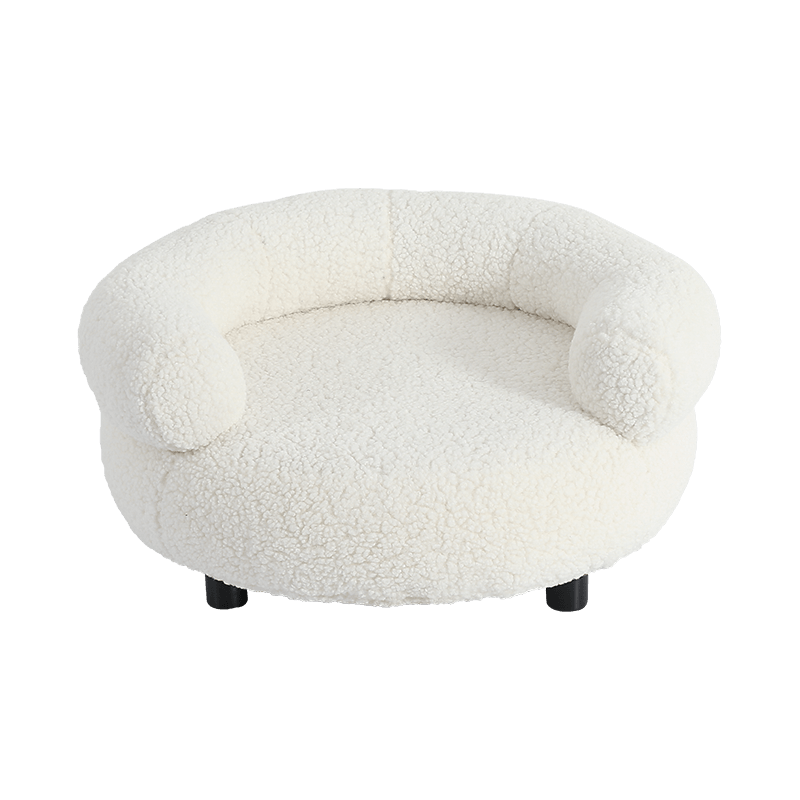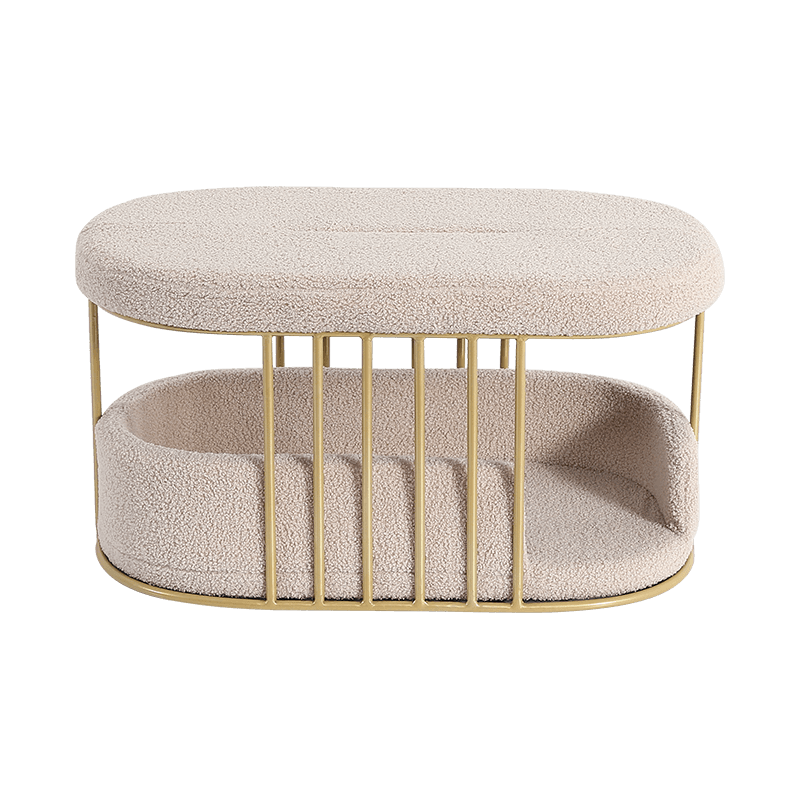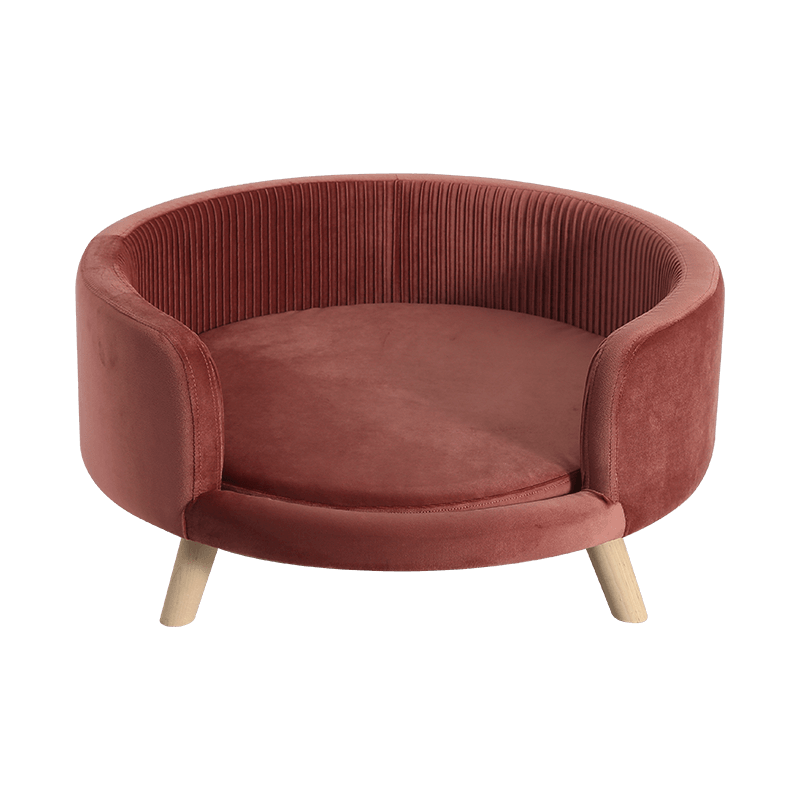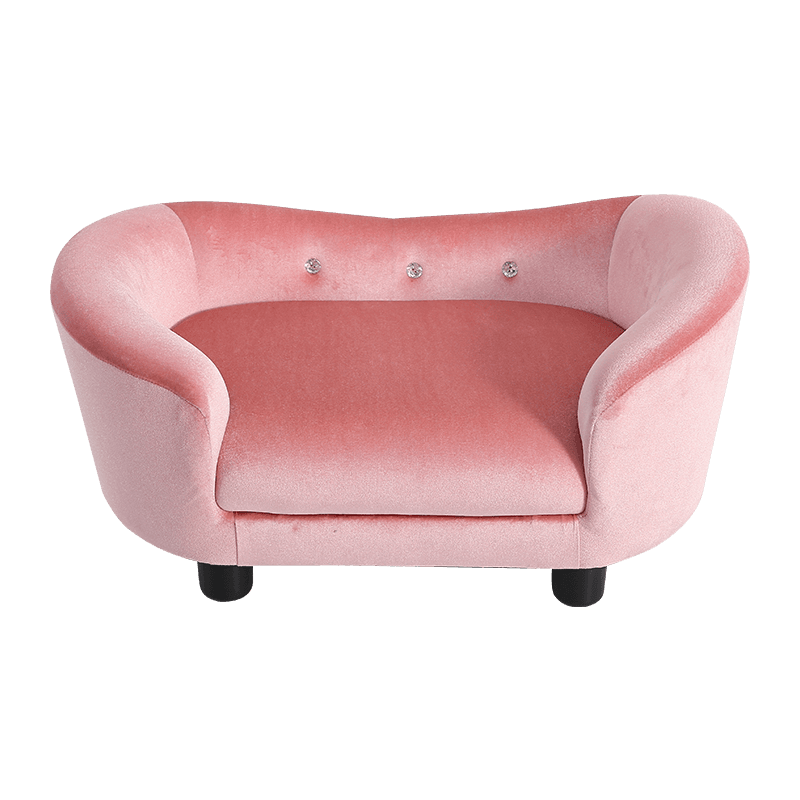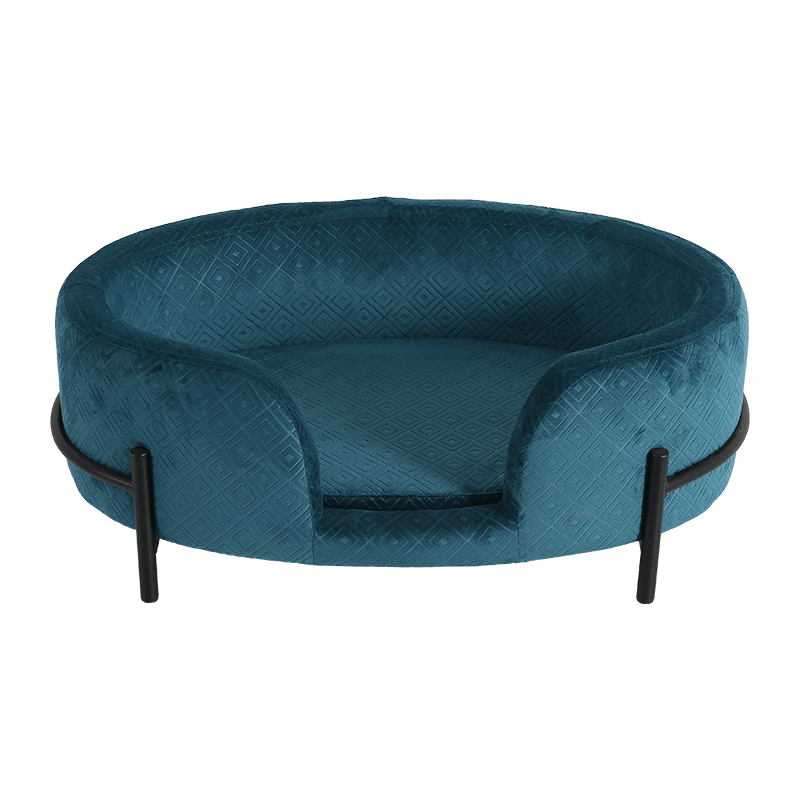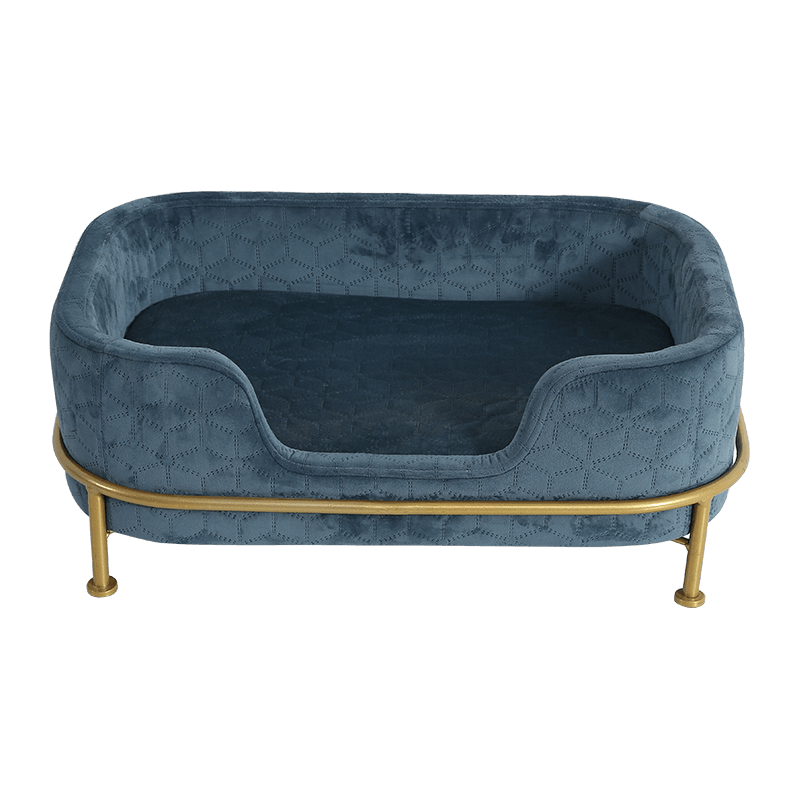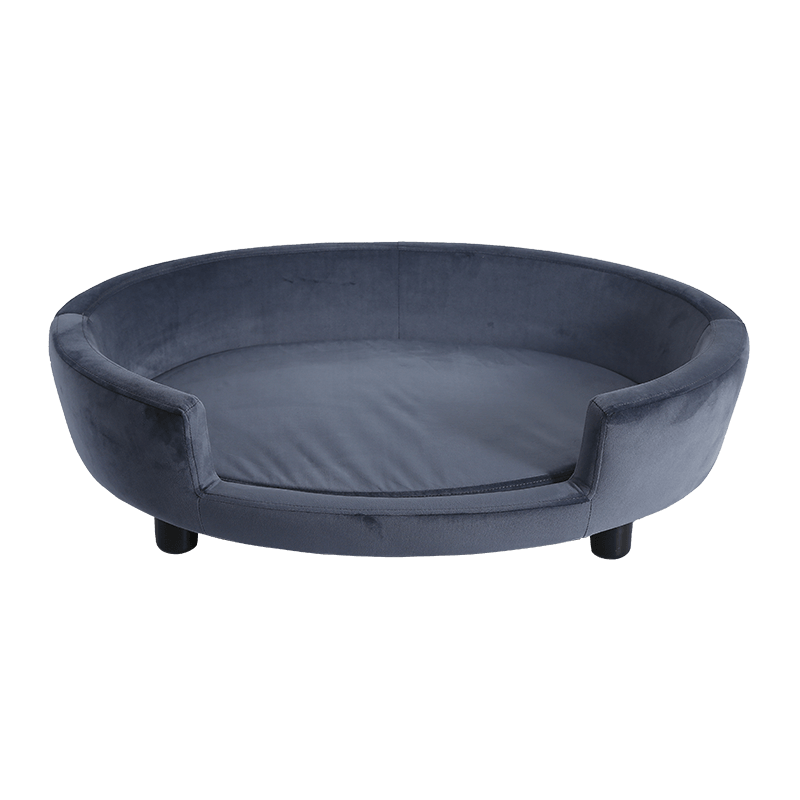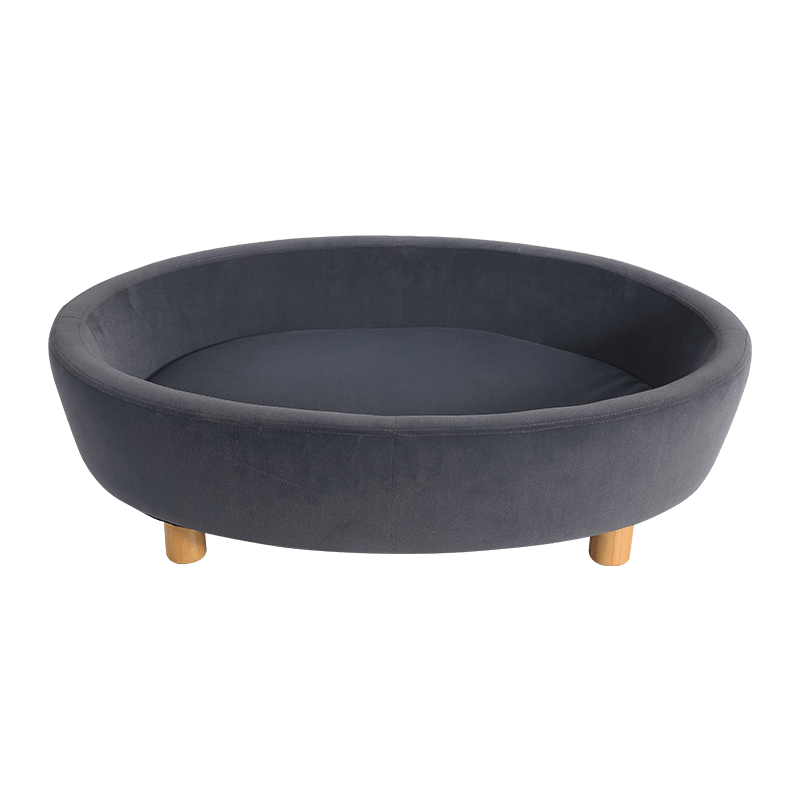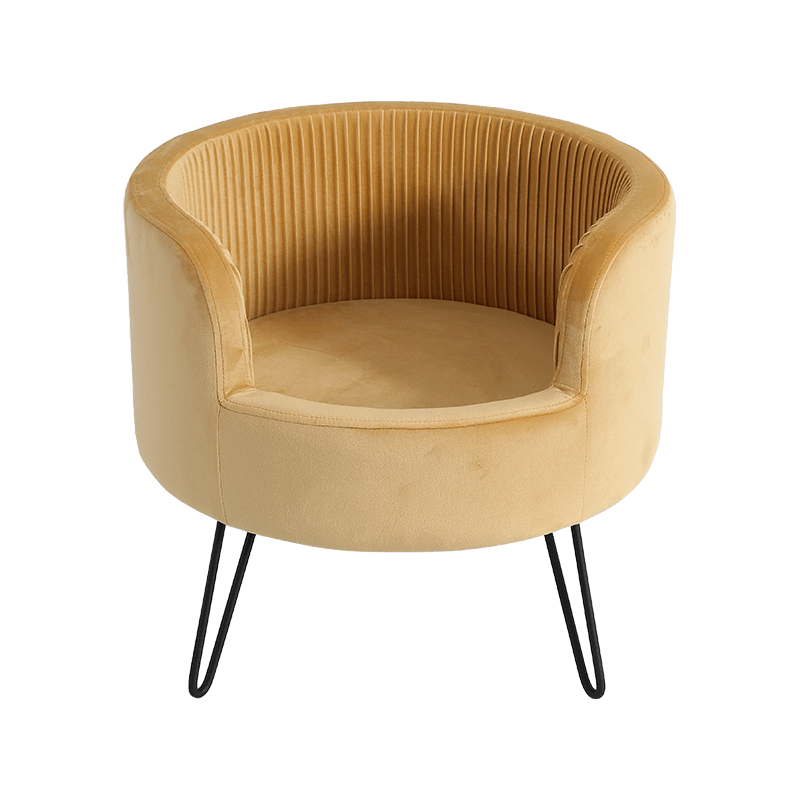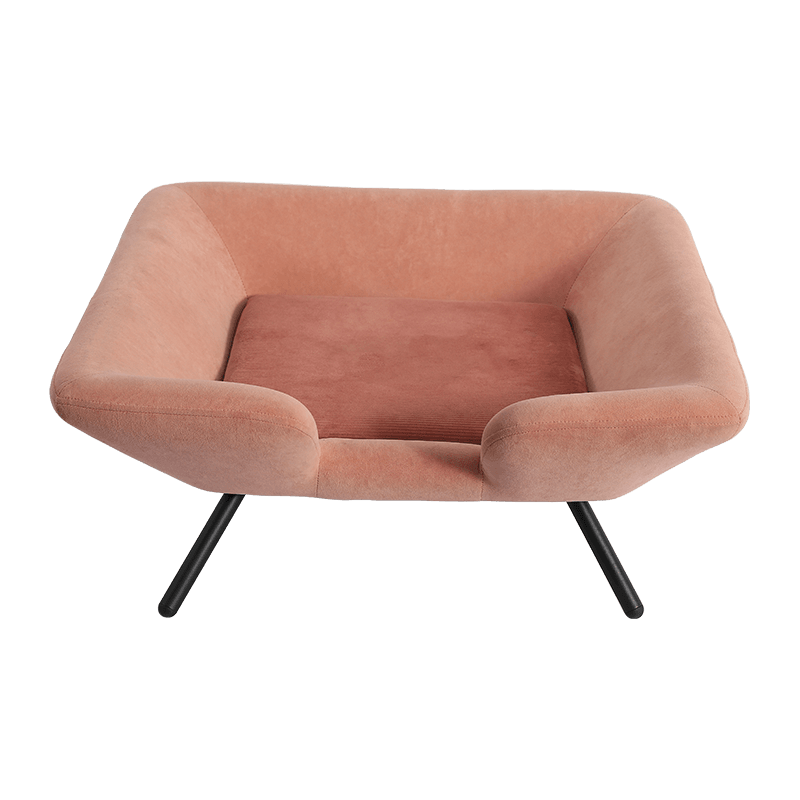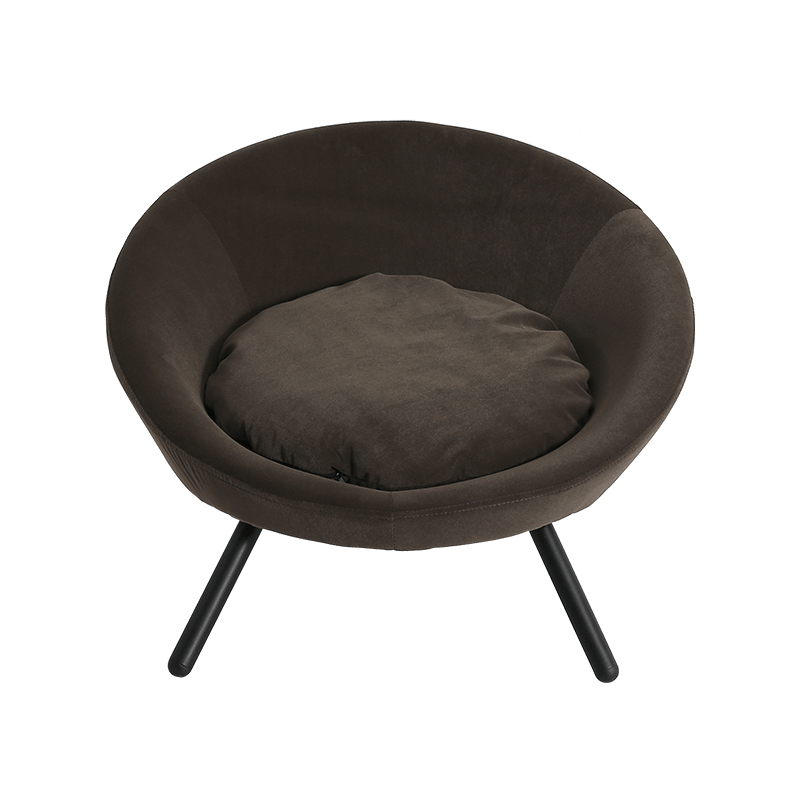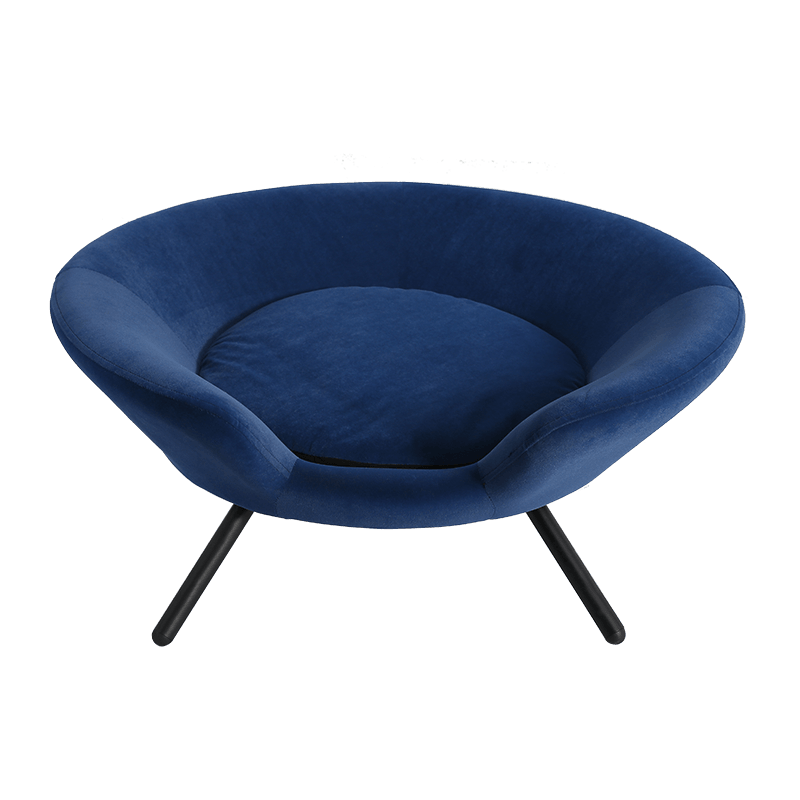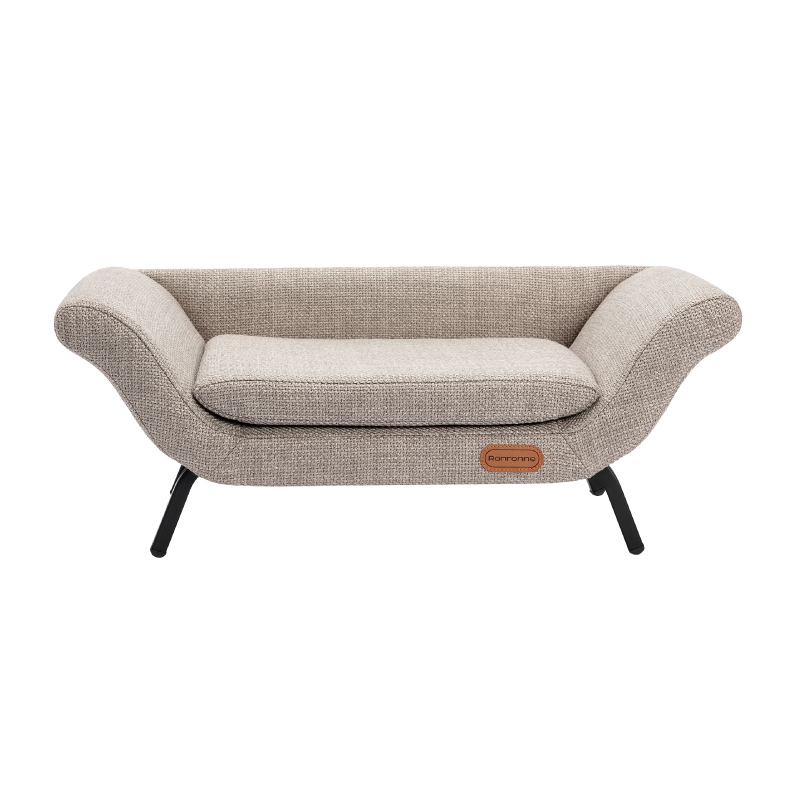
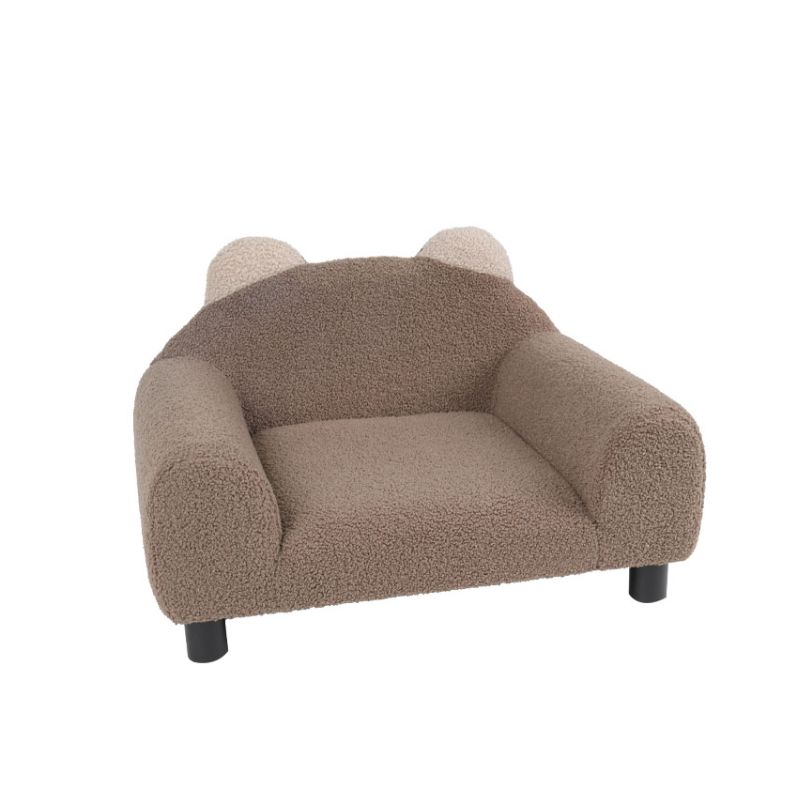
Construction follows the same wood-and-sponge base used across the wider catalogue, with the nest walls built from shaped foam wrapped in fabric rather than a rigid frame, since flexibility at the rim matters for a pet climbing in and out repeatedly. A pet nest manufacturer supplying this style needs tight control over foam density at the base versus the side walls, because a nest with side walls that are too firm can feel more like a barrier than a cozy edge, while walls that are too soft collapse under a pet's weight and lose the enclosed feeling that makes the nest shape appealing in the first place. Bottom panels are reinforced separately from the side walls to prevent sagging in the center after repeated use, a detail that matters most for larger nest sizes carrying bigger dogs. Fabric on the nest rim is stitched with a slightly heavier thread gauge than the base panel, since the rim takes more direct contact from claws and paws during entry and exit. Buyers comparing the pet nest against a standard round cushion bed often note that the raised wall shape holds its form better after machine washing, since the internal foam core keeps the wall structure from collapsing flat the way a loosely filled cushion can after repeated laundering.
Wholesale buyers sourcing pet nests typically request a size range spanning small, medium, and occasionally large, along with a few fabric or color options per size to round out a retail assortment. The nest style also performs well as an entry-level SKU for new pet product retailers, since it occupies a lower price point than a full pet sofa while still presenting as a considered, design-forward product rather than a basic cushion. Private-label packaging, including printed boxes and care instruction inserts, can be arranged for buyers building their own retail brand around this product line. Because the nest shares tooling with several other cushion-based products in the catalogue, first-order sample turnaround is generally quick, which helps buyers evaluate the product ahead of seasonal buying deadlines. Buyers introducing the pet nest as a new SKU for their store often start with a small trial order across two or three colorways to gauge which fabric performs best with their specific customer base before scaling to a larger repeat order. The nest also ships efficiently, since its compact, semi-flexible construction compresses more easily for freight than a rigid-frame product, which can meaningfully reduce per-unit shipping cost on larger volume orders. Documentation covering fabric composition and basic care instructions is available for buyers who need this information for their own product listings or retail compliance requirements. Compared with a fully rigid cave-house structure, the semi-flexible nest wall also tends to show fewer visible wear marks over time, since the foam-and-fabric wall flexes slightly under a pet's weight rather than holding a fixed crease at a single stress point the way a rigid panel eventually can.